
Polygraph Testing for Infidelity: What to Expect and How It Works

When a relationship is in crisis, uncertainty can be as painful as the suspected betrayal itself. Polygraph (lie-detector) testing for infidelity offers a structured way to address doubts, verify claims, and create a factual foundation for crucial decisions. For many couples, it is not about “catching” someone; it is about finally getting clear, evidence-based answers so they can decide what comes next.
At Locaters International / BestPI.com, a significant portion of our work involves relationship and infidelity concerns. That experience has allowed us to refine a professional, respectful process meant to reduce anxiety, protect everyone’s dignity, and provide meaningful results you can actually use.
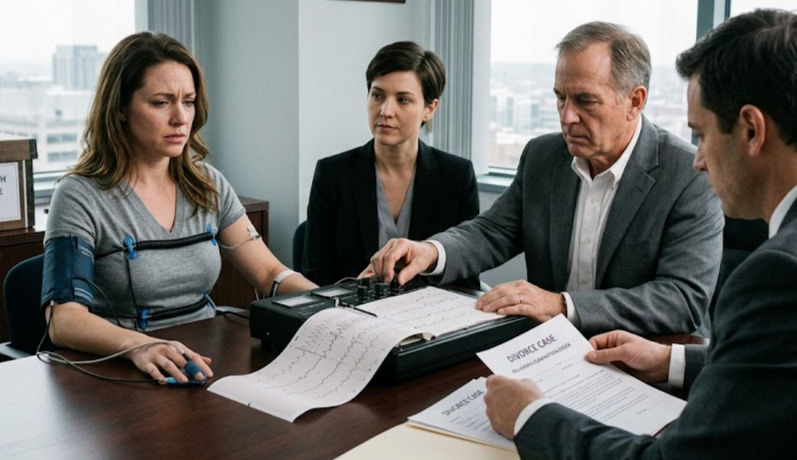
Why People Choose an Infidelity Polygraph
People turn to polygraph testing in relationship situations for several reasons:
They suspect a partner of cheating and feel that conversations alone are going nowhere.
They have been accused of cheating and want a way to clear their name.
The couple is trying to reconcile after a known incident and wants verification of “full disclosure.”
There are lingering questions about online affairs, emotional affairs, or “just texting” situations.
A polygraph test cannot fix a relationship on its own, but it can give both parties a measurable level of clarity and confidence (one way or the other) that simple talk often cannot provide.
What a Polygraph Can – and Cannot – Do
A polygraph exam measures physiological changes such as breathing, sweat gland activity, and cardiovascular response while the subject answers carefully constructed questions. The goal is to determine whether the responses are consistent with truthfulness or deception.
What it can do in infidelity cases:
Test specific, clearly defined behaviors (e.g., sexual contact, kissing, sexting, meeting someone from an app).
Help verify whether there have been other undisclosed incidents.
Provide an independent, professionally documented opinion about the subject’s truthfulness.
What it cannot do:
It cannot read minds or determine “love,” intentions, or feelings.
It cannot answer vague, broad, or hypothetical questions.
It is not a magic wand; results are one piece of information to be considered alongside behavior, communication, and counseling.
Understanding these limits helps you set realistic expectations and get the most value out of the test.
The Step‑by‑Step Process: From First Call to Final Report
Here is what you can expect when you schedule an infidelity polygraph with a professional firm like Locaters International, Inc.
1. Initial Consultation
The process begins with a confidential conversation – usually by phone, email, or secure messaging.
During this consultation, we will:
Listen to your situation and your goals (suspect infidelity, accused of infidelity, rebuilding trust, etc.).
Explain whether polygraph is appropriate for your case.
Discuss who will be tested, where the exam will occur, and the general timeline.
Review pricing, preparation requirements, and what to expect on the day of the test.
This is also when we clarify whether you are hiring us directly as the examinee (to clear your name) or as the concerned partner seeking answers. That distinction matters ethically and legally, as the person being tested must voluntarily agree to the exam.
2. Scheduling and Preparation
Once you decide to move forward, we schedule a specific date and time for the exam.
Before the appointment, you will receive:
Instructions on arrival time and length of the exam (a typical full session can take 2–3 hours).
Guidance on medication, sleep, caffeine, and alcohol prior to the test (some substances can affect physiology and will be discussed).
Policies regarding payment, rescheduling, and cancellation.
If both partners are involved, it is often helpful to agree in advance on:
What issues will be tested.
How the results will be shared (together, separately, first with the examinee, etc.).
The Day of the Exam: What Happens in the Office
A professional infidelity polygraph exam consists of several structured phases. It is not just “hook up and ask questions.” Much of the critical work happens before the subject ever connects to the instrument.
1. Pre‑Test Interview
The pre‑test interview is the foundation of a valid polygraph exam. It typically takes 45–60 minutes and includes:
Reviewing the subject’s background and the relationship history relevant to the test.
Clarifying exactly what is being alleged or questioned.
Discussing medical conditions, medications, and any recent stressors that might impact the test.
Explaining how the polygraph works, what will be measured, and what the subject will experience physically and mentally.
Most importantly, the examiner will work with the subject to develop and agree on the exact test questions. There are no surprise questions. Every question that will be asked on the polygraph is discussed and refined in advance so the subject fully understands it.
This phase is also where the examiner ensures the subject is participating voluntarily and without coercion. If the subject is being forced to take the test, or is unable to provide informed consent, a reputable examiner will not proceed.
2. Question Development for Infidelity Cases
Polygraph works best with clear, time‑bounded, behavior‑based questions. In a relationship or infidelity case, typical question themes might include:
Whether the subject has had sexual contact with anyone outside the relationship during a specific period.
Whether there has been physical intimacy (kissing, touching) with another person.
Whether the subject has met in person with someone they were communicating with secretly (dating apps, social media, etc.).
Whether the subject has engaged in explicit online or phone behavior: sexting, exchanging explicit photos, video calls, or chat.
Good questions:
Are specific (“Since we started dating in 2020…,” “In the last 12 months…”).
Are about actions, not feelings (“Have you had sexual contact with anyone other than your partner?” rather than “Have you been faithful in your heart?”).
Are answerable with “Yes” or “No.”
Bad questions (which will not be used) include:
“Do you love your spouse?”
“Do you intend to cheat again?”
“Have you ever thought about cheating?”
You will have the opportunity to review and approve the questions before the testing begins. If your concern is, for example, whether your partner had a one‑time affair on a specific trip, the questions can be tailored tightly to that trip and those circumstances.
3. Setting Up the Polygraph Instrument
After the pre‑test interview and question review, the subject is seated in a comfortable chair and connected to the polygraph instrument. Modern systems are computerized and non‑invasive.
Typical components include:
Pneumograph tubes around the chest and abdomen to measure breathing.
A blood pressure cuff (or similar sensor) to monitor cardiovascular changes.
Sensors on the fingers or palm to measure sweat gland activity (skin conductance).
The examiner will take a few minutes to ensure the subject is comfortable and can sit relatively still. Movement, fidgeting, or talking outside of answering questions can introduce noise into the data, so a calm environment is essential.
4. Conducting the Test
Once everything is set, the formal testing begins. You can expect:
A series of “charts” (runs of questions), usually 3–4 repetitions, with short breaks in between.
Each chart includes a mix of relevant questions (about the alleged infidelity), comparison or control questions, and neutral questions.
The subject answers “Yes” or “No” verbally to each question, exactly as discussed in the pre‑test interview.
The examiner will not argue, confront, or interrogate during the actual testing phase. Their role is to present the questions in a standardized, calm manner and record the physiological responses.
After the Test: How Results Are Evaluated and Delivered
Once the charts are collected, the subject is disconnected from the instrument, and the examiner moves into the analysis phase.
1. Data Analysis
The examiner will:
Review the physiological recordings from each chart.
Score the responses using an accepted scoring system and, often, computerized algorithms.
Look for consistent patterns across multiple runs to determine whether responses to the relevant questions indicate truthfulness, deception, or are inconclusive.
In some cases, minor artifacts (movement, coughing, etc.) can affect readability. That is why multiple charts and professional judgment are important.
2. Possible Outcome Categories
Results typically fall into one of three broad categories:
No significant reactions / consistent with truthfulness: The data supports that the subject’s answers to the relevant questions were truthful.
Significant reactions / consistent with deception: The data indicates deceptive responses to one or more relevant questions.
Inconclusive: The data is not strong enough in either direction to support a clear opinion (due to physiological factors, anxiety, movement, or other issues).
A reputable examiner will explain which category applies and why, and will not stretch the data to say more than it legitimately supports.
3. Verbal Explanation and Written Report
Depending on your arrangement, results may be delivered:
First to the examinee, in private, with the option to share with the partner.
To both parties together in a post‑test meeting.
To an attorney, counselor, or third party you have authorized.
You can expect:
A straightforward explanation of the findings in plain language.
Clarification on each relevant question and how it scored.
A written report summarizing the process, the questions asked, and the examiner’s professional opinion.
We encourage couples to consider discussing results with a therapist or counselor, especially when the relationship is ongoing and both parties want to move forward constructively.
Common Concerns and Misconceptions
“I’m nervous – will that make me fail?”
Everyone is nervous. Polygraph procedures are designed with that reality in mind. The examiner’s job is not to punish anxiety but to distinguish ordinary nervousness from the specific physiological patterns associated with deception. Being open about your nervousness in the pre‑test interview is normal and expected.
“Can someone ‘beat’ the polygraph?”
There is a lot of folklore, but in practice, attempts to manipulate the test usually create suspicious or distorted charts that a trained examiner can recognize. Deliberate countermeasures may lead to an inconclusive result or a professional opinion that the subject attempted to interfere with the test’s validity.
“Is the test biased against honest people?”
Modern, properly administered polygraph exams use standardized protocols designed to protect truthful examinees. While no test is perfect, thousands of successful relationship‑related exams show that honest people generally test as such when the process is professional, questions are well‑designed, and the subject follows instructions.
How to Get the Most Out of an Infidelity Polygraph
To maximize the usefulness of the test:
Be clear about your goals: Are you trying to clear a specific allegation, establish full disclosure, or verify ongoing faithfulness?
Agree in advance on the core questions: Both partners should understand what is – and is not – being tested.
Combine testing with communication or counseling: Use the results as a tool, not a weapon.
Choose a qualified, experienced examiner: Infidelity cases are emotionally charged; they require someone who can handle both the technical and human side professionally.
The polygraph is a tool to help you make informed decisions. Whether those decisions involve reconciliation, separation, or setting new boundaries, having solid information is better than living with suspicion and guesswork.
Ready to Talk About an Infidelity Polygraph?
If you are dealing with infidelity concerns or accusations and feel stuck in a cycle of doubt and denial, a professionally conducted polygraph exam may help you move forward with clarity and confidence.
Locaters International has extensive experience handling sensitive relationship cases with discretion, compassion, and professionalism. We will walk you through the process, help you frame the right questions, and provide clear, understandable results you can rely on.
Contact us today to schedule a confidential consultation about polygraph testing for infidelity, and take the first step toward getting the truth you need to move on, whichever direction that may be.


kjl