
From Pit Road to the Courtroom: How Private Investigators Fuel Winning Lawsuits

How a Private Investigator Can Strengthen Your Lawsuit
When most people think about lawsuits, they picture lawyers filing motions, taking depositions, and arguing in court. What they often do not see is the quiet investigative work that builds those cases behind the scenes. In many disputes, especially those involving trade secrets, misconduct, or complex fact patterns, a seasoned private investigator can be the difference between speculation and proof.
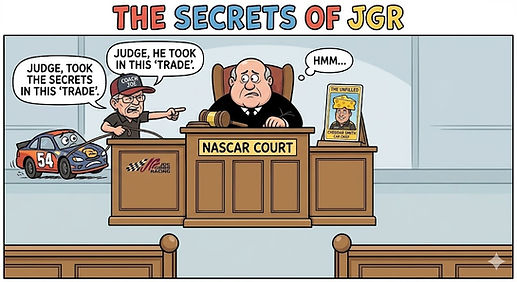
A recent high‑profile NASCAR lawsuit offers a useful illustration. In that case, Joe Gibbs Racing (JGR) accused a former executive and a rival team of misusing proprietary data and trade secrets. Among other steps, JGR hired a private investigator to discreetly follow the former employee and document his meetings and movements, which later became part of the narrative presented to the court. That is exactly the sort of targeted, real‑world fact‑finding a PI can provide for civil and commercial litigation of all kinds.
Whether you are an attorney, in‑house counsel, or an individual party, understanding how to use a private investigator, like our investigators at Locaters International, can effectively help you build a stronger case, avoid surprises, and use the discovery process more strategically.
Turning Suspicion Into Evidence
In many lawsuits, clients come to counsel with a strong suspicion but no hard proof. They may believe a former employee is stealing data, a partner is hiding assets, or an opposing party is lying about their activities. A private investigator’s first contribution is often to turn those suspicions into verifiable facts.
Surveillance and Activity Documentation
As in the JGR matter, surveillance can confirm or refute key factual assumptions in a case.
A PI can:
Conduct lawful, targeted surveillance to document:
Meetings with competitors
Trips to specific locations (offices, storage facilities, warehouses)
Patterns of behavior that contradict sworn statements
Capture time‑stamped photos and video that:
Show who met with whom
Establish the sequence of events
Corroborate or impeach testimony
In the NASCAR dispute, the investigator documented a meeting between the former executive and the rival team’s owner shortly after sensitive data was copied, evidence JGR later highlighted as part of its “breadcrumbs.” In other types of cases—non‑compete disputes, trade secret claims, fraudulent transfer matters—similar surveillance can demonstrate that conduct is occurring despite denials.
Timeline and “Breadcrumb” Reconstruction
Modern litigation often involves digital and physical “breadcrumbs”: meetings, file transfers, off‑site visits, and unusual patterns of activity. While forensic experts handle device analysis, PIs are uniquely positioned to tie those technical findings to real‑world behavior.
They can:
Build detailed timelines that combine:
Surveillance observations
Public records
Social media activity
Travel and business records
Cross‑reference those timelines with:
Device forensics (file access times, folder creation)
Email and messaging logs (when provided by counsel/clients)
Highlight inconsistencies and gaps that may deserve targeted discovery requests or deposition questions
In the JGR case, counsel pointed to evidence that the former employee accessed a sensitive “Project” folder around the time of meetings with a rival team. A PI can help assemble this kind of narrative in any lawsuit where intent, timing, or coordination between parties is at issue.
Supporting Discovery, Not Replacing It
A private investigator does not replace formal discovery. Instead, good investigative work makes discovery more focused and effective.
Identifying Targets for Expedited or Narrow Discovery
Judges often resist broad “fishing expedition” discovery requests and instead insist on narrow, clearly justified inquiries—precisely what happened in the JGR lawsuit, where the judge approved limited expedited discovery but denied a broader subpoena request for communications with multiple teams.
A PI can help counsel:
Identify which people, entities, or accounts are most likely to hold relevant information.
Narrow the date ranges, locations, and topics for discovery requests.
Provide enough factual detail to persuade a judge that a request is specific and justified.
This is particularly important when seeking:
Expedited discovery (before typical deadlines)
Discovery from third parties
Discovery that might otherwise look overbroad
By doing background research, surveillance, and open‑source intelligence (“OSINT”), a PI gives counsel a grounded factual basis for more precise subpoenas, document requests, and deposition topics.
Locating Witnesses and Hidden Relationships
In almost every type of civil or commercial case, it helps to know who is actually involved and where to find them. Private investigators routinely:
Identify and locate:
Former employees
Vendors and consultants
Minority partners or silent stakeholders
Map relationships between:
Individuals and companies
Affiliated entities (shell companies, related LLCs)
Competing organizations
In a trade secret or unfair competition case, for example, a PI may discover that:
A “new customer” is actually a long‑time associate of the defendant.
A supposedly independent entity is controlled by a relative or insider.
A key witness has moved, changed employers, or is using another name.
These findings help attorneys determine whom to subpoena, whom to depose, and where to serve process efficiently.
Building and Challenging Credibility
Credibility often decides cases. Judges and juries look closely at whether a party appears to be honest, consistent, and transparent. A private investigator can develop evidence that either supports your client’s credibility or undermines the other side’s.
Background and Impeachment Research
Without crossing legal or ethical lines, PIs can gather background information that might never surface in a standard database pull.
They can:
Verify or challenge:
Employment history and professional credentials
Licensing status and disciplinary history
Prior litigation and criminal history
Identify public‑facing contradictions, such as:
Social media posts inconsistent with sworn statements
Public comments or interviews that tell a different story
Marketing materials or press releases that contradict a party’s claims
In the JGR matter, the team’s lawyers argued that post‑employment file access and secret meetings contradicted the former executive’s narrative about why he left and how he interacted with the rival team. Similar mismatches can be powerful in any lawsuit.
Corroborating Your Client’s Story
Just as a PI can reveal problems in the opposing party’s story, they can also corroborate your client’s version of events, for example:
Confirming that a client truly visited a location when they said they did.
Verifying that certain meetings, conversations, or transactions took place.
Documenting physical conditions (roadway layouts, property conditions, signage) that support your client’s testimony.
Solid corroboration helps counsel present a consistent, credible narrative and can deter the other side from pursuing aggressive impeachment strategies.
Preserving Evidence Before It Disappears
Time is rarely on your side in litigation. Witnesses move, memories fade, and digital information gets overwritten. A private investigator can help preserve key evidence early.
Early Scene and Condition Documentation
PIs can:
Visit and document locations:
Business premises and job sites
Accident scenes
Properties involved in boundary, nuisance, or landlord‑tenant disputes
Capture:
Photographs and video from multiple angles
Environmental conditions (lighting, signage, obstructions, access points)
Visible changes over time if repeat visits are needed
In business disputes—such as cases involving alleged misuse of equipment, trade secrets, or physical assets—capturing the state of things early can later help show whether something was added, moved, or removed after litigation was anticipated.
Quiet, Pre‑Litigation Fact‑Finding
Sometimes the best time to hire a PI is before a complaint is ever filed. Pre‑litigation investigative work can:
Confirm whether a case is worth filing at all.
Identify likely defenses and counterclaims.
Provide leverage for settlement discussions.
For example, if a company suspects a former executive has gone to a competitor with proprietary data, a PI might:
Document their new role and responsibilities.
Observe their interactions with the competitor’s team.
Identify whether customers or vendors are being solicited in violation of agreements.
This is similar in spirit to what occurred in the JGR case, where surveillance and forensic findings supported a narrative that proprietary information was copied and potentially used by a competitor.
Working Effectively With a Private Investigator
To get the most from a PI in litigation, it is important to integrate them into the legal strategy from the start and maintain clear communication.
Engage Through Counsel
To maximize protections and ensure alignment with legal strategy:
Retain the PI through the law firm whenever possible.
Make sure assignments, reports, and communications flow through counsel.
Discuss privilege, work‑product, and anticipated discovery issues up front.
This structure helps ensure that:
The investigator’s work is guided by legal needs and admissibility concerns.
Sensitive strategy discussions stay within the privileged circle.
The PI does not inadvertently generate discoverable material that harms your position.
Define Scope and Objectives Clearly
Judges, like the one in the JGR lawsuit, frown on “fishing expeditions.” The same is true for investigative work—unfocused investigations are costly and can create unnecessary risk.
When engaging a PI:
Clearly define:
The specific questions you need answered.
The time frame and geographic scope.
Any known constraints (budget, deadlines, court orders).
Prioritize tasks in phases:
Phase 1: Quick checks and initial surveillance or OSINT.
Phase 2: Deeper dives, extended surveillance, or multi‑jurisdictional research if Phase 1 justifies it.
This phased approach keeps costs under control and ensures each investigative step is justified by what has already been learned.
Use Bulletproof Reporting
Attorneys need reports they can confidently use in court or discovery.
A good investigative report should:
Be factual and objective, avoiding speculation.
Include dates, times, locations, and clear descriptions of each observation.
Attach or reference exhibits, such as:
Photos and video stills
Public records
Maps or diagrams
Explain methodology briefly so the court understands how information was obtained.
Well‑structured reports make it easier to:
Draft affidavits and declarations.
Prepare witnesses and exhibits for hearings.
Survive scrutiny on cross‑examination.
Key Ways a Private Investigator Can Help in a Lawsuit
For the “skimmers,” it helps to summarize the main benefits. A private investigator can support your lawsuit by:
Turning suspicions into documented facts through:
Lawful surveillance
Timeline reconstruction
Cross‑referencing digital and physical “breadcrumbs”
Strengthening discovery strategy by:
Identifying the right people and entities to target
Narrowing dates, locations, and topics
Providing factual support for expedited or focused discovery
Enhancing credibility assessments by:
Conducting background and impeachment research
Finding contradictions between public conduct and sworn claims
Corroborating your client’s version of events
Preserving critical evidence early by:
Documenting scenes and conditions before they change
Capturing physical and contextual details jurors rarely see
Supporting pre‑litigation evaluations and settlement leverage
Integrating smoothly with legal strategy by:
Working under counsel’s direction and privilege
Producing clear, court‑ready reports
Adjusting scope as facts evolve
Conclusion: Quiet Work, Big Impact
The Joe Gibbs Racing lawsuit illustrates how investigative work including surveillance, forensic, and carefully framed discovery can shape the trajectory of a case long before trial. But the same principles apply far beyond NASCAR and trade‑secret fights. In employment disputes, non‑compete and non‑solicitation cases, partnership breakups, personal injury matters, and complex business litigation, a skilled private investigator can uncover, document, and preserve the facts that truly matter.
For lawyers and clients alike, the key is to involve the investigator early, give them a clear mission, and integrate their findings tightly with your legal strategy. Done well, that quiet work behind the scenes can give you the insight, and evidence
you need to make smarter decisions, negotiate from strength, and, when necessary, prove your case in court.


rtytryutiuo